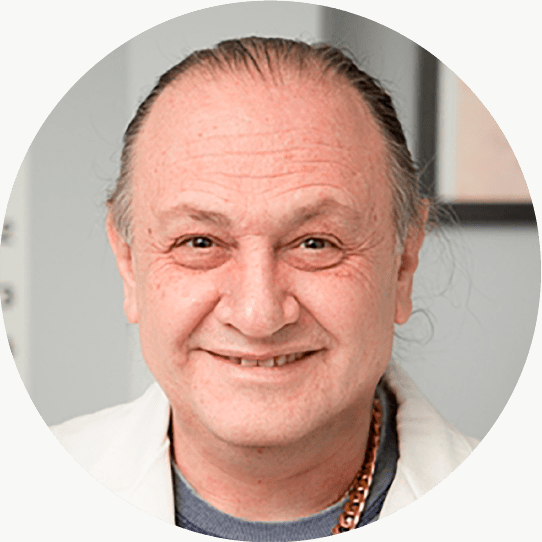



Dr. Ilya Burshteyn
Primary Care Physician located in New York, NY
Ilya Burshteyn is a dedicated and interested internist and primary care doctor based in Forest Hills and Brooklyn, NY. Dr. Burshteyn attended the Tashkent Medical Institute in Uzbekistan, where he received his medical degree, and completed his residency in internal medicine at Kingsbrook Jewish Medical Center.
Dr. Burshteyn runs his own practice and speaks English, Russian and Uzbek. His awareness of these different languages makes him accessible to patients from a variety of cultural backgrounds.
Dr. Burshteyn is sensitive to the uniqueness of each patient’s situation and adapts his consultations and treatment options appropriately to accommodate individual needs and concerns.
Services







Contact Us
Brooklyn Office
- 1401 Ocean Ave LD, Brooklyn, NY 11230
- (718) 513-4455
- (718) 375-1944
- londonmedicalpc@gmail.com
Office Hours:
- MON 10AM - 3PM (Telemedicine)
- TUE 3PM - 8PM
- WED 10AM - 3PM (Telemedicine)
- THU Closed
- FRI 10AM - 3PM
- SAT Closed
- SUN 10AM - 3PM
Forest Hills Office
- 10525 64th Ave, Forest Hills, NY 11375
- (718) 459-3494
- (718) 606-6069
- londonmedicalpc@gmail.com
Office Hours:
- MON 10AM - 3PM (Telemedicine)
- TUE 10AM - 2PM
- WED 10AM - 3PM (Telemedicine)
- THU 3PM - 8PM
- FRI Closed
- SAT 10AM - 3PM
- SUN Closed
Annual Physical
Why do I need an annual physical?
Annual physicals are the number one way to help identify changes in your health that could indicate you’re at risk for developing a more serious disease or medical condition. They can also help identify preventive steps you can take to maintain good health, like having certain vaccinations or tests that can identify diseases and risk factors. And they provide an opportunity for the doctor to provide you with helpful health-related advice while also giving you a chance to ask questions.
What does an annual physical include?
During the first part of your exam, Dr. Burshteyn will talk to you about your recent health history, including gathering information about any problems or illnesses you may have had since your last visit. During the physical portion of your exam, vital signs like blood pressure and pulse will be measured, your ears and throat will be examined, and he’ll listen to your heart and lungs and gently palpate (press) your belly to check your liver and abdomen area. Finally, he may order blood work or other lab tests so he can provide you with the best advice based on your health.
How should I prepare for my physical?
Be sure to have a list of all the medications you’re taking, or better yet, bring them with you. Make a list of any questions or concerns you have ahead of time so you can ask the doctor during your exam. Having a list ensures you don’t forget anything. Also be prepared to provide medical information like a family health history that may help identify potential genetic risk factors. If it’s your first time at the office or you’ve had medical tests performed elsewhere since your last visit, you may want to have your records forwarded to the office prior to your exam.
Pre-operative Clearance
What is the purpose of the pre-operative clearance exam?
The primary aim of the pre-operative exam is to make sure you’re ready for surgery by evaluating your general health and your health in relationship to your surgery and recovery. It also will help identify any steps that need to be taken to get you in the best shape possible prior to surgery. Clinical studies have indicated that pre-operative exams can significantly reduce the risks of surgery and anesthesia as well as provide a speedier recovery. During the exam, you’ll also have time to talk to Dr. Burshteyn about your concerns so you feel more confident about the procedure and its benefits.
How far in advance should I schedule my exam?
In most cases, your pre-operative exam will be scheduled within two to four weeks of your surgery. This enables Dr. Burshteyn to provide your surgeon with the most current information about your health while also leaving plenty of time for lab work or other tests to ensure you’re in the best health possible. Your surgeon will be able to provide you with a timeline for scheduling your pre-operative exam.
What’s involved in a pre-operative clearance exam?
Your pre-operative exam will follow the same pattern as your annual physical exam, checking your vital signs like your blood pressure and pulse and listening to your heart and lungs. However, the nature of a pre-operative exam differs from a regular physical because it focuses primarily on your health in relation to the surgery you’ll be having. That means it will be more focused on determining any potential risk factors and identifying additional tests or steps that should be taken to ensure your surgery and recovery are as successful and risk-free as possible.
Ultrasounds
What is ultrasound?
An ultrasound is an imaging procedure used to “look inside” your body. It uses high-frequency sound waves, bouncing them off your organs and other internal structures to create an image that can be used for diagnosis and disease management. Unlike CT scans and x-rays, ultrasounds do not use radiation to create images.
What can I expect during an ultrasound?
Ultrasounds are performed in darkened private rooms so the images are more easily visible on the attached computer screen. During the exam, a hand piece will be passed several times over the area that’s being examined to create several detailed images. A gel will be used on the end of the hand piece to allow it to move more easily across your skin and to enable the sound waves to create clearer images. Ultrasounds are noninvasive, which means there are no incisions. Most ultrasounds take only minutes to complete, and once completed, the images will be analyzed and the results will be provided to your doctor for review.
How is ultrasound used in practice?
Ultrasound is used to help diagnose diseases and monitor health-related conditions such as pregnancy. They can be used to gain a better understanding of specific biologic processes and also to monitor the health of internal organs. Ultrasounds are often ordered as part of the diagnostic procedure to check for cancers, gallstones, ulcers and other conditions that affect specific organs and more general body functions. They provide important information beyond what can be gained from a regular physical exam and along with other forms of imaging, have significantly reduced the need for exploratory surgery. Perhaps their most recognizable use is during pregnancy, when they can be used to monitor the growing fetus and predict the baby’s gender.
Pulmonary function tests
What are pulmonary function tests (PFTs)?
Pulmonary function tests (PFTs) are a group of tests that measure how well your lungs work. This includes how well you’re able to breathe and how effective your lungs are able to bring oxygen to the rest of your body. Your doctor may order these tests if you’re having symptoms of lung problems, if you’re regularly exposed to certain substances in the environment or workplace, to monitor the course of chronic lung disease such as asthma or chronic obstructive pulmonary disease (COPD), or to assess how well your lungs are working before you have surgery. PFTs are also known as lung function tests.
How do I prepare for pulmonary function tests?
If you’re on medications that open your airways, such as those used for asthma or chronic bronchitis, your doctor may ask you to stop taking them before the test. Pain medications may also affect the results. You should tell your doctor about any over-the-counter and prescription pain medications you’re taking. It’s important that you don’t eat a large meal before testing. A full stomach can prevent your lungs from inhaling fully. You should also avoid food and drinks that contain caffeine, such as chocolate, coffee, and tea, before your test. You should also avoid smoking at least an hour before the test, as well as strenuous exercise before the test. Be sure to wear loose-fitting clothing. If you wear dentures, wear them to the test so your mouth can fit tightly around the mouthpiece. If you have had recent eye, chest, or abdominal surgery or a recent heart attack, you will likely need to delay the test until you have fully recovered.
What happens during the tests?
Spirometry measures the amount of air you breathe in and out. You’ll sit in front of a machine and be fitted with a mouthpiece and a nose clip. You may breathe normally, then breathe in and out as deeply or as quickly as you can. You may also breathe in a medication that opens your airways, then breathe into the machine again.
A plethysmography test measures the volume of gas in your lungs. You’ll sit or stand in a small booth and breathe into a mouthpiece. Your doctor can learn about your lung volume by measuring the pressure in the booth.
A diffusion capacity test evaluates how well the small air sacks inside the lungs, called alveoli, work. You will be asked to breathe in certain gases such as oxygen, helium, or carbon dioxide. The machine can detect when you breathe out this gas. This tests how well your lungs are able to transfer oxygen and carbon dioxide to and from your bloodstream.
Vaccinations
Why do I need to be vaccinated?
Vaccinations provide the body with important defenses against serious diseases and conditions that can have life-threatening consequences. While the body produces many antibodies against diseases through the immune system, there are some diseases that are too strong for the body’s natural defenses to ward off on its own. Vaccines provide that critical protection so you can stay healthy throughout adulthood.
If I had vaccinations as a child, do I still need them as an adult?
Yes. Some vaccinations, such as the shingles vaccine, are only for adults. Others that you had as a child may require booster vaccinations. And still other vaccinations may have been developed since you were a child. Dr. Burshteyn will review your health records and history to determine which vaccinations you need.
What kinds of vaccinations are available?
Dr. Burshteyn offers flu, shingles, HPV, hepatitis A and B, measles, mumps and rubella, pertussis (whooping cough), pneumonia, polio, tetanus, meningitis, rabies, and other vaccines required for school entry, employment, or international travel.
Can a vaccine make me sick?
No, vaccines will not make you ill. With some vaccinations, you may experience discomfort or aching in or near the injection site or a slight achiness overall as your body makes antibodies. Any minor side effects will resolve within a few hours to a day or so.
In-House Laboratory
What is in-house lab testing?
In-house lab testing means our office can provide you with a variety of medical tests right on site, without the inconvenience that comes from having to schedule a test at a lab or hospital. Our lab features state-of-the-art equipment and highly skilled personnel for optimal quality control so you can get your results quickly and feel confident about the lab testing procedures we implement. Lab testing is one of the best ways to identify diseases and conditions in their earliest stages, or identify risk factors that may predispose you to a disease.
How can in-house lab testing help me have better health?
Having your lab work done here enables us to identify diseases or possible risk factors that could make you more prone to developing medical conditions in the future. By having your tests performed here, we have the results right away so we can schedule a follow-up exam or other care as indicated by your results. In-house testing can also be more convenient than traveling to a lab. Greater convenience means it’s easier to get the tests you need so Dr. Burshteyn can help you make informed decisions about your care.
What types of in-house testing does your office offer?
We offer a broad range of testing services, including tests for diabetes, AMA recognized health screening panels, blood tests, urinalysis, and a variety of other tests and panels that can help identify medical conditions as well as potential risk factors. To learn about our complete range of in-house testing services, call our office.